
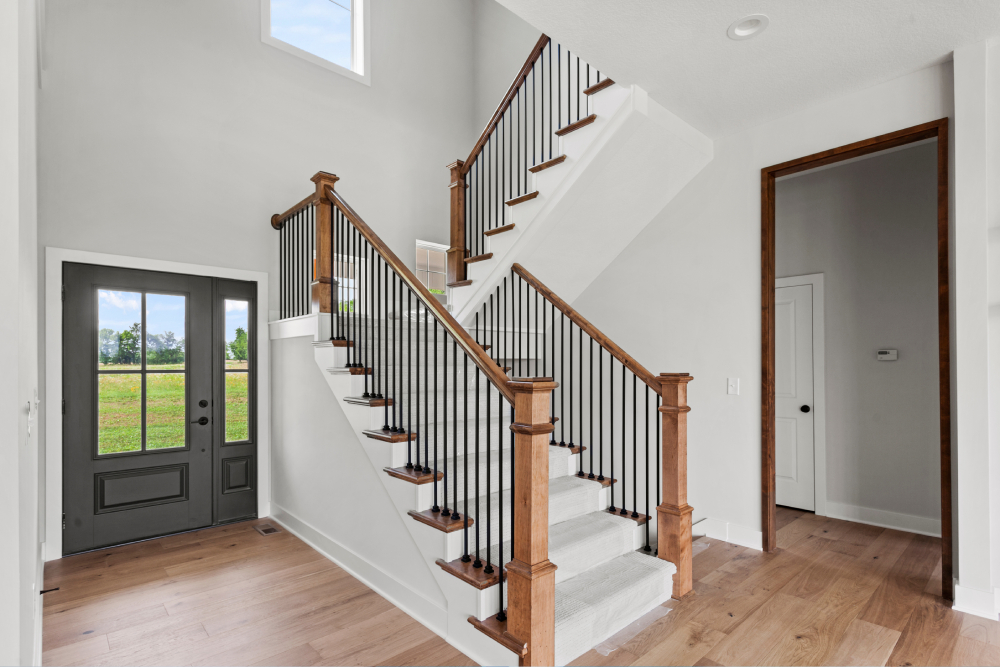
Refinishing stairs in a Winnipeg home usually takes two to four days; the timeline depends on the wood, the number of coats, and how dry the air happens to be that week. It’s a multi-step process… sanding, staining, sealing, and a realistic schedule is often kept on track when a local team like Floor Country Canada is brought in.
Fast Facts
- Most Winnipeg stair refinishing projects run 2 to 4 days from start to finish, sometimes longer in humid summer stretches.
- Dry winter air, often below 30% relative humidity indoors, can cause finish to cure faster but also raises the risk of visible brush marks.
- Stairs with 13 to 15 steps are typical in older Winnipeg homes, which affects both labor time and material cost.
- Oil-based finishes generally need more cure time than water-based ones, sometimes an extra 24 hours.
- Many homeowners refinish stairs at the same time as adjoining hardwood floors, to match tone and wear patterns.
Why Stairs Wear Faster Than Floors
Stairs take a beating that flat flooring never sees. Every step is a pivot point, a grip point, a place where boots scuff and pets scratch. In many Winnipeg homes, especially older character houses in areas like Wolseley or River Heights, wear is shown on the stairs years before it shows on the surrounding hardwood. This is partly because the nosing, the front edge of each tread, gets hit directly with every step. Refinishing stairs on their own, without touching the rest of the floor, is common; it often makes financial sense too.
What the Refinishing Process Actually Involves
The work is done in stages, and skipping one usually shows later. First, old finish is sanded off, typically in two to three passes with progressively finer grit. Stain is then applied, if a color change is wanted, followed by sealant coats. Each layer needs time to cure before the next one goes on. Depending how you look at it, the sanding stage is actually the most disruptive part, not the drying. Dust containment matters here, particularly in homes with open staircases leading to shared living spaces.
How Winnipeg’s Climate Changes the Timeline
Dry prairie winters speed up drying, though finish can also set unevenly if it’s applied too thick. In summer, cure time is slowed by higher humidity, sometimes by a full day. Crews adjust their approach based on the season, and this is one reason local experience matters more than a generic online guide. A staircase refinished in January behaves differently than one done in July, even when identical products are used.
What Homeowners Should Expect Day to Day
Most projects run two to four days, though older homes with uneven stair construction can take longer. The first day is usually sanding and prep, which is loud and dusty. By day two, stain and the first coat of sealant are typically applied. The stairs are usually off-limits overnight. A side entrance or alternate route is planned ahead of time, especially in split-level or bungalow layouts common across Winnipeg. Bit by bit, the project starts to look finished, even while coats are still curing underneath.
A Quick Example From a Typical Project
One homeowner in a 1960s bungalow in East Kildonan wanted stairs refinished to match new vinyl plank flooring upstairs. The stairs were pine, softer than expected, and extra care was needed during sanding to avoid gouging. It took three days total, slightly longer than average; the color match, though, turned out close enough that the transition between floor and stairs barely showed. That’s usually where it clicks for most homeowners, once the stairs and floors are seen working as one surface instead of two separate projects. Funny thing, really, how much that small detail matters.
Planning the Budget and the Timeline Together
Costs vary depending on wood species, stair count, and whether stain or a clear finish is used. A straight staircase with 13 steps costs less than a curved one with landings. It’s generally smart to budget a bit of flexibility into the timeline too, since humidity swings or unexpected wood damage can add a day. Guesswork later is usually avoided when an in-home estimate is gotten first, and this is a step often skipped when homeowners rely on online calculators alone. That sounds good on paper, but a calculator can’t see the actual condition of the wood.
Getting Started With the Right Local Team
Refinishing stairs is one of those projects where local know-how actually changes the outcome, not just the price. Floor Country Canada has worked with Winnipeg homeowners and builders for over a decade, handling everything from hardwood floor refinishing to full kitchen and bathroom renovations tied to flooring updates. If stairs are next on the renovation list, a second opinion is worth getting before the sanding starts. Visit Website to see current services and book a consultation with the Floor Country Canada team.
Mini-FAQ
Q: How long will my stairs be out of use during refinishing? In most cases, stairs can be walked on within 24 to 48 hours after the final coat is applied, though full cure can take longer. It depends on the finish type and the room’s humidity. A temporary plan, like a side door or a ladder route, is usually needed for a day or two by homeowners with only one staircase.
Q: Can I just refinish the stairs without redoing the whole floor? Yes, this is done often, especially when the floors are newer but the stairs show heavier wear. The tricky part is matching stain color, since stairs and floors absorb finish differently depending on wood grain and foot traffic. A sample board is usually tested first, so the match can be confirmed before anything is committed to.
Q: What’s the biggest mistake homeowners make with stair refinishing? Underestimating dry time is probably the most common one. Winnipeg’s dry winter air can trick people into thinking a coat is cured when it’s only surface-dry underneath. If it’s walked on too soon, soft spots or footprints get left in the finish, and the whole area then needs sanding out and redoing.
Q: Does the type of wood affect how the stairs should be refinished? It does, quite a bit, in a way. Softer woods like pine scratch and dent more easily, so the sanding process has to be handled more gently. Harder species such as oak or maple can take more aggressive sanding, though extra coats are often needed to get an even stain color across all the treads and risers.
Q: Is it worth hiring a professional instead of doing it myself? For most Winnipeg homeowners, yes, mainly because stairs involve tight corners, vertical risers, and uneven wear that’s harder to sand evenly by hand. How local humidity swings affect dry time is also something a professional crew understands well, which keeps the finish from bubbling or peeling months later.
Research Sources